According to the NAR's 2023 Remodeling Impact Report, a new patio delivers an estimated 95% cost recovery at resale — making it one of the highest-returning outdoor investments a homeowner can make.
This guide covers 18 paver patio designs grouped into four style families — Classic, Modern & Contemporary, Natural & Organic, and Statement & Specialty — so you can identify what fits your home's architecture, your backyard's terrain, and your vision for outdoor living.
Key Takeaways
- Paver pattern, material, and color together define the entire mood of your outdoor space
- Designs fall into four families: Classic, Modern & Contemporary, Natural & Organic, and Statement & Specialty
- Match your paver design to your home's architectural style for the most cohesive result
- Hillside and sloped backyards need proper subbase engineering before paver installation begins
- A design-build team experienced in hillside terrain helps prevent costly mistakes on complex sites
Classic Paver Patio Designs
Classic patterns are symmetrical, timeless, and compatible with a wide range of home styles ranging from craftsman bungalows to Mediterranean estates. These designs have been requested by homeowners for decades and continue to hold their own against newer trends.
Herringbone Pattern
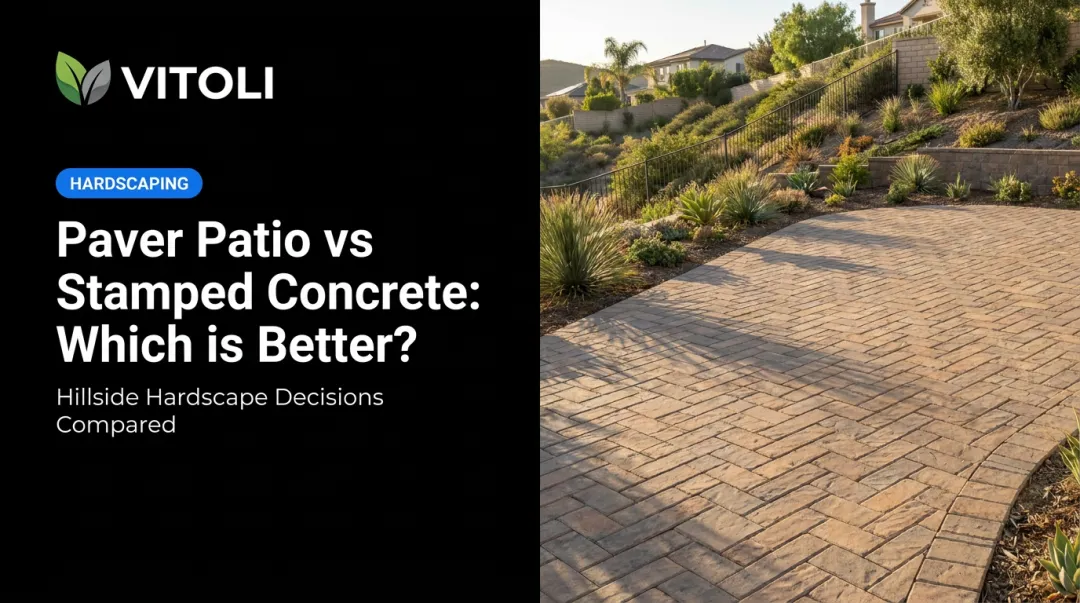
Pavers arranged in an interlocking zig-zag at 45 or 90 degrees create both visual energy and structural strength. According to Unilock's design guides, the herringbone layout is one of the most durable and shift-resistant patterns for high-traffic applications — making it a smart choice for patios that see daily use.
Best use cases:
- Large backyard patios where the repeating geometry makes an impression from above
- Warm neutral or charcoal tones that let the pattern carry the visual weight
- High-foot-traffic zones near entryways or dining areas
Basketweave Pattern
Alternating pairs of pavers laid horizontally and vertically mimic a woven surface. The result is a charming, approachable texture that suits cottage-style and traditional homes particularly well. It's less directional than herringbone, giving it a more relaxed, settled feel.
Running Bond Pattern
Pavers staggered like traditional brickwork in straight, offset rows. This linear pattern enhances the sense of space and works especially well in narrower patios or transitional areas leading from the home to the yard. Clean, unfussy, and reliably handsome across nearly any home exterior.
Cobblestone Pattern
Irregular or rounded pavers arranged in a flowing, organic pattern that evokes a European village square. This style pairs beautifully with lush plantings and adds warmth and texture to casual outdoor living spaces. In Southern California, it works particularly well alongside Mediterranean landscaping.
Circular Pattern
Pavers arranged in radiating arcs or a full circle anchor a clear focal point and give the backyard a deliberate sense of center. Contrasting border colors amplify the visual impact, drawing the eye inward from every angle.
Works well for:
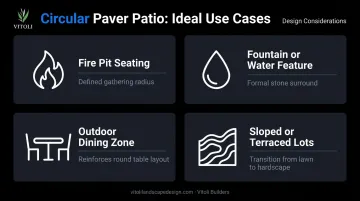
- Fire pit seating areas that benefit from a defined gathering radius
- Fountain or water feature installations needing a formal surround
- Dining zones where a circular frame reinforces the round table layout
- Transition spaces between lawn and hardscape on sloped or terraced lots
Modern & Contemporary Paver Patio Designs
Modern paver designs prioritize clean geometry, minimal joint lines, and sophisticated palettes: charcoal, slate gray, and crisp white. These designs suit contemporary architecture and create a refined backdrop for outdoor furniture and entertaining.
Grid / Stack Bond Pattern
Pavers aligned in perfect rows and columns with uniform spacing create a precise, minimalist grid. This works best with large-format square or rectangular pavers in a single tone — any pattern variation undermines the sleek, graphic quality the design depends on.
Diagonal / Slanted Pattern
Standard rectangular or square pavers rotated 45 degrees add directional energy to a flat patio. The angled layout creates movement underfoot and works especially well with two-tone paver combinations where the diagonal lines draw attention across the surface.
Large-Format Slab Design
Oversized concrete or natural stone slabs — 24 inches and up, per Unilock's large-format specification guidance — laid with minimal joint lines create a nearly seamless surface. Fewer visible joints visually enlarge the space, making this a strong choice for mid-sized backyards that need to feel more expansive.
Two-Tone or Multi-Size Pattern
Combining rectangular pavers of varying dimensions in two complementary shades adds subtle variation and visual depth. This technique transitions beautifully from indoor tile to outdoor patio, creating a cohesive look that feels deliberate from the ground up.
Pavers + Turf (or Greenery) Mix
Alternating paver sections with strips of artificial turf or natural ground cover creates a permeable, nature-integrated design that feels both polished and organic. This approach is popular across Los Angeles and Ventura County, where drought-tolerant artificial turf keeps the look lush without excessive water use — particularly relevant given that outdoor irrigation can account for up to 70% of a household's water use.
Natural & Organic Paver Patio Designs
Natural and organic designs draw on irregular shapes, earthy materials, and textures found in nature. These styles suit landscapes with existing greenery, mature gardens, or hillside settings where a rigid geometric pattern would feel out of place.
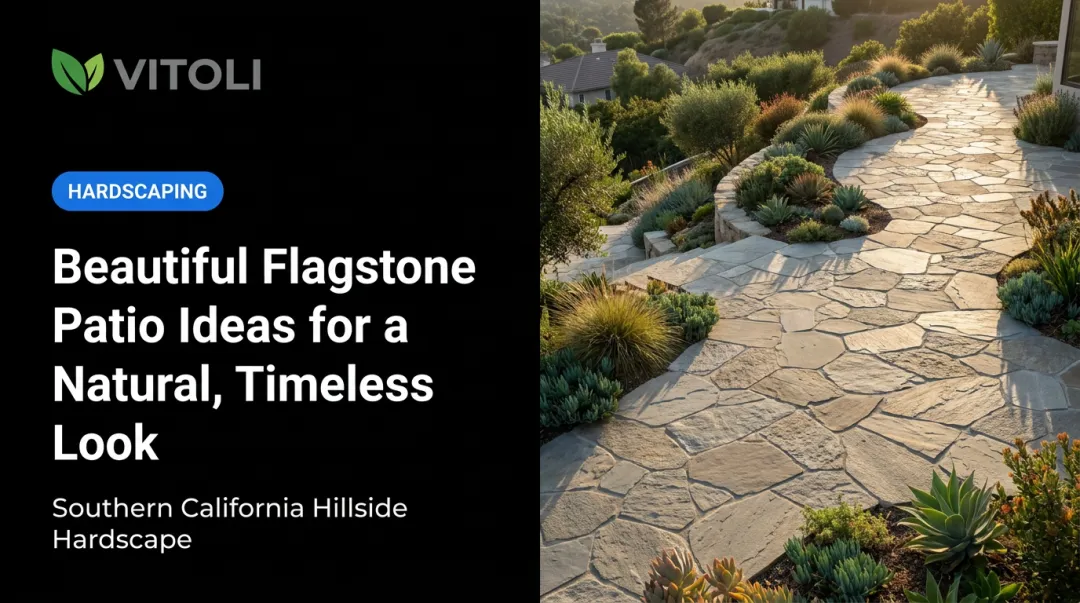
Flagstone Irregular Layout
Large, naturally shaped stone pieces — sandstone, bluestone, slate — arranged in an organic, free-form pattern with pea gravel or ground cover filling the gaps. This style blends seamlessly into garden settings and creates a relaxed, approachable atmosphere. Bluestone, for example, is available in sizes ranging from 12×24 to 24×36 inches, offering real flexibility in composition.
Random / Rustic Pattern
A mix of paver sizes in warm earthy tones — terracotta, sandstone, brown — laid without a fixed repeating unit. This approach suits Mediterranean, Spanish, and Southwestern-style homes and feels especially authentic in Southern California's warm landscape. Every installation produces a genuinely unique result, which makes this pattern worth considering when you want a patio that reads as custom rather than catalog.
Mosaic Pattern
A decorative, asymmetrical arrangement using pavers of different shapes, sizes, and colors to form a custom visual composition — the most expressive approach in this guide. It works best as an accent zone or focal-point patio rather than a large continuous surface, such as a central circle surrounded by more structured paving.
Pavers with Greenery Insets
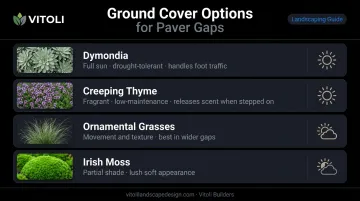
Square or rectangular pavers set with deliberate gaps filled by low-growing ground cover plants. UC ANR research identifies dymondia as particularly effective as a filler between pavers in full-sun conditions, which describes most Southern California backyards. The result is a patio that reads as part of the garden rather than placed on top of it — hardscape and planting integrated rather than separated.
Ground cover options that work well between pavers:
- Dymondia — drought-tolerant, dense, handles foot traffic in full sun
- Creeping thyme — fragrant, low-maintenance, releases scent when walked on
- Ornamental grasses — adds movement and texture; best in wider gaps
- Irish moss — works in partial shade, creates a lush, soft appearance
Statement & Specialty Paver Patio Designs
Specialty designs incorporate architectural focal points like fire pits, water features, or radial geometry that transform a basic surface into a true destination. These designs require precise planning and professional installation to execute well.
Circular Fire Pit Patio
A round paver pad designed around a central fire feature, using radiating cobblestone or irregular stone rings that expand outward from the fire pit. The circular geometry reinforces the communal, gathering-centered purpose of the space and draws guests naturally toward the center. CAL FIRE guidance supports using pavers and stone as noncombustible surfaces in fire-adjacent zones.
Fan / Radial Pattern
Pavers set in sweeping arcs radiating from a central point, often used at entryways or as an accent feature within a larger patio. The fan pattern draws the eye inward and creates a strong sense of arrival, making it especially effective at the threshold between the home and the backyard.
Pinwheel Pattern
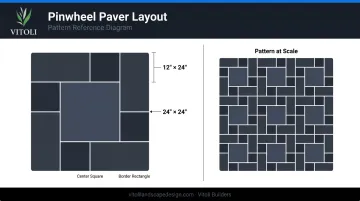
A modular pattern where one large square paver is surrounded by four smaller rectangular pavers rotated outward, creating the illusion of a spinning pinwheel. Each paver is laid at a 90-degree angle to the one adjacent to it, according to Unilock's pattern documentation. The result is a dynamic surface that works well in standard paver sizes, with no custom cutting required.
Brick Herringbone Patio
Classic clay or concrete brick pavers arranged in the herringbone zig-zag to create a warm, historically inspired surface. A whitewash finish or mixed-tone brick adds dimension and pairs well with farmhouse and traditional architectural styles, including homes with wood siding, exposed brick, or warm stucco exteriors.
Key details that make herringbone work:
- Scale: Standard brick (4×8") locks the pattern tightly; larger formats loosen it
- Tone mixing: Two-color blends add depth without requiring a complex layout
- Orientation: A 45-degree diagonal run adds energy; a straight run reads more formal
How to Choose the Right Paver Patio Design for Your Backyard
Match the Pattern to the Architecture
The paver style should feel like a natural extension of the home's design language:
- Traditional and craftsman homes → cobblestone, brick herringbone, basketweave
- Contemporary and modern builds → large-format slabs, grid/stack bond, diagonal patterns
- Mediterranean and Spanish-style homes → flagstone irregular, random rustic, mosaic accents
Southern California has a heavy concentration of Mediterranean and Spanish colonial architecture in Los Angeles and Ventura County — a fact that makes flagstone and random rustic layouts particularly fitting for many local properties.
Consider Scale, Slope, and Drainage
Patio size determines pattern complexity. Smaller patios benefit from simpler patterns that don't feel busy — a large-format slab or running bond layout suits a compact space far better than a detailed mosaic.
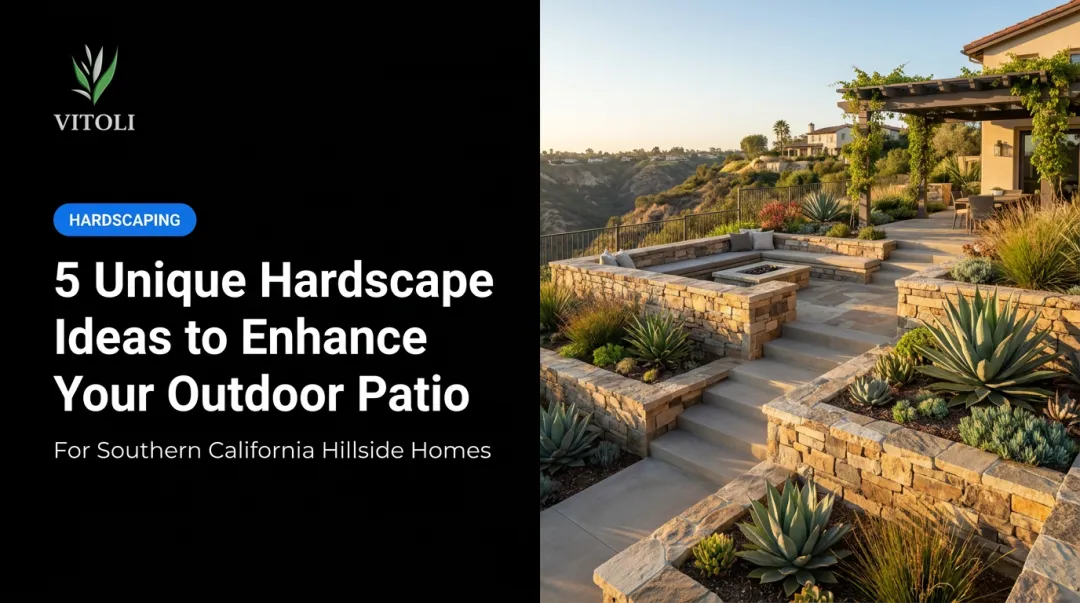
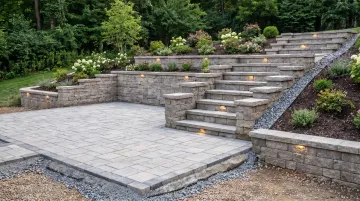
Sloped and hillside backyards introduce a separate set of challenges. CMHA engineering guidance confirms that subbase thickness depends on soil strength, drainage, climate, and traffic loads — meaning hillside patios need site-specific base design, not generic depth assumptions. Without proper grading, drainage integration, and edge restraint planning, even a beautifully designed paver surface can shift, settle, or fail within a few seasons.
That's why hillside patios benefit from a contractor who handles drainage engineering, subbase preparation, and hardscape installation together. Vitoli Builders, a Calabasas-based hillside specialist with over 1,800 projects across Los Angeles and Ventura County, uses an integrated design-build approach specifically to prevent the coordination failures that happen when design and construction are managed separately.
Choose Color to Complement the Landscape
Belgard's color guidance recommends considering how neutral tones — beige, gray — read warm or cool depending on their blend. Practical guidelines:
- Earthy neutrals and terracotta suit stucco, wood, and warm-toned exterior finishes common throughout Southern California
- Charcoal and slate gray create a striking contrast against modern steel-and-glass architecture
- Buff and sandstone tones harmonize naturally with drought-tolerant, native plant landscapes
When in doubt, pull a color from the home's exterior — roof tile, window trim, or stucco — and look for a paver blend that echoes it without matching it exactly.
Frequently Asked Questions
How much should a 20×20 paver patio cost?
A 400 sq ft paver patio in Los Angeles typically runs $9 to $28 per sq ft installed, or roughly $3,600 to $11,200, according to Angi's regional pricing data. Natural stone and complex patterns push costs higher; simple concrete pavers and straightforward layouts sit at the lower end. Site-specific variables like slope and access can shift that range considerably, so get current quotes from local contractors.
What are some design ideas for backyard pavers?
Popular backyard paver design ideas include herringbone and running bond for classic looks, large-format slab grids for modern spaces, flagstone irregular layouts for natural garden settings, and pavers-with-turf combinations for a contemporary Southern California aesthetic. Circular patterns anchored around fire pits are among the most requested specialty designs.
What is the most popular paver patio pattern?
Herringbone is consistently among the most widely featured patterns across major paver manufacturers, valued for its structural interlocking strength and visual versatility. Unilock and Belgard both describe it as one of the most durable, shift-resistant options for high-traffic applications — explaining its enduring prevalence.
What type of paver material is best for a backyard patio?
Concrete pavers offer the best balance of cost, durability, and design variety — basic material starts around $1 per sq ft. Natural stone (flagstone, bluestone, slate) delivers the highest-end aesthetic, with materials reaching $15 per sq ft, and suits properties where premium finish justifies the added cost.
How do I choose the right paver color for my patio?
Match paver tones to the home's exterior finish. Earthy neutrals and warm terracottas suit stucco and wood exteriors; cool charcoals and grays complement modern steel-and-glass architecture. Sampling pavers against your home's exterior in natural light before committing is the most reliable approach.
Can paver patios be installed on a sloped or hillside backyard?
Yes — but proper subbase grading, drainage engineering, and compaction are non-negotiable on sloped terrain. Hillside installations require a contractor experienced in complex terrain; the subsurface engineering that precedes the paver installation often matters more than the paver design itself.