The challenge isn't ambition. It's knowing where to start. This article breaks down five high-impact ideas for designing a luxury outdoor living space — from engineered terrace systems to lush landscaping — with specific guidance for the hillside and sloped properties that define much of Los Angeles and Ventura County.
Key Takeaways
- The NAR's 2023 Remodeling Impact Report puts outdoor kitchen ROI at 100% and new patios at 95% cost recovery
- Southern California's hillside terrain requires engineering precision — grading, drainage, and structural support — before any design decision is made
- Each of the five ideas in this guide — terraces, kitchens, pools, fire features, and landscaping — works differently on a hillside property than on flat ground
- What separates a high-end outdoor space from just an expensive one: intentional zoning, cohesive materials, and a design that works with the land, not against it
What Makes an Outdoor Living Space Truly Luxurious?
Luxury isn't just about price — it's about how a space functions and feels. A genuinely luxurious outdoor living space works the same way a well-designed interior room does: everything has a purpose, materials are chosen deliberately, and the overall environment feels cohesive rather than assembled.
Three characteristics show up in every truly luxurious outdoor space:
- Distinct zones for cooking, dining, lounging, and ambiance, each laid out for its specific purpose
- Natural stone, architectural concrete, teak, and weather-resistant metals that hold up and improve with age
- Features built around the property's actual terrain, dimensions, and architecture rather than dropped in as afterthoughts
Hillside properties across Southern California add a fourth factor: engineered stability. The grading, retaining walls, and drainage systems beneath a beautiful terrace must be executed with the same care as the finish materials on top. Without that foundation, even the most visually stunning space won't last.
5 Luxury Outdoor Living Space Design Ideas
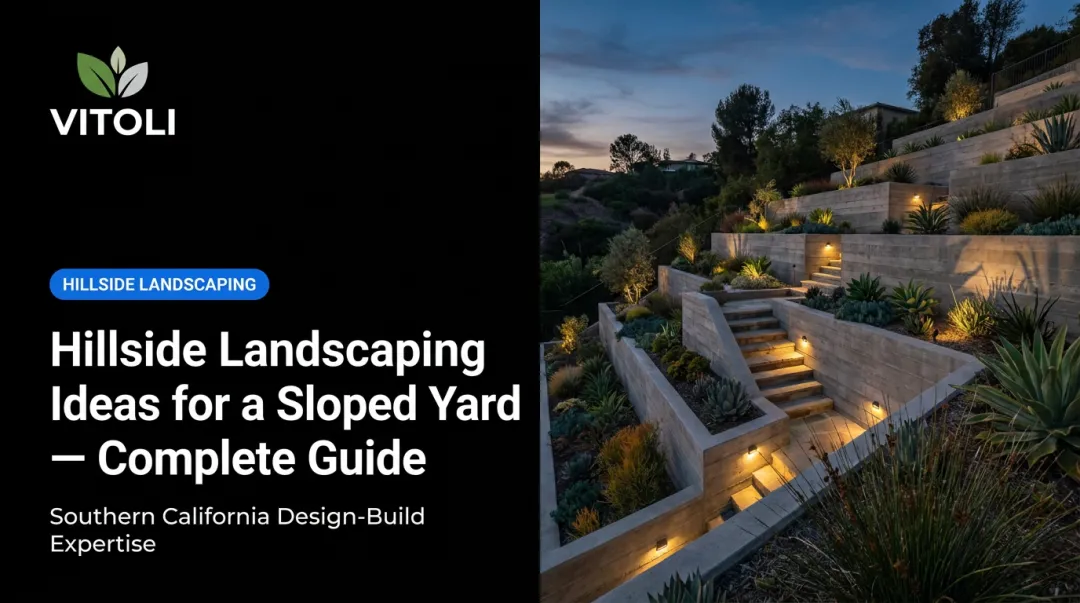
Tiered Terraces and Elevated Hardscape Patios
On a sloped or multi-level lot, flat usable space is the scarcest commodity. Tiered terracing solves that problem by converting unusable hillside into a series of distinct, functional outdoor platforms — each level can serve a different purpose while the elevation difference creates visual drama and, often, panoramic views.
Premium material options for luxury terraces include:
- Natural travertine — warm tones, natural texture, works well in Mediterranean and transitional styles
- Large-format porcelain tile — extremely low water absorption (0.5% or less per TCNA standards), clean lines, ideal for modern aesthetics
- Flagstone — irregular pattern, natural character, excellent for organic or transitional designs
- Architectural concrete — highly customizable, durable, pairs well with steel and glass architecture
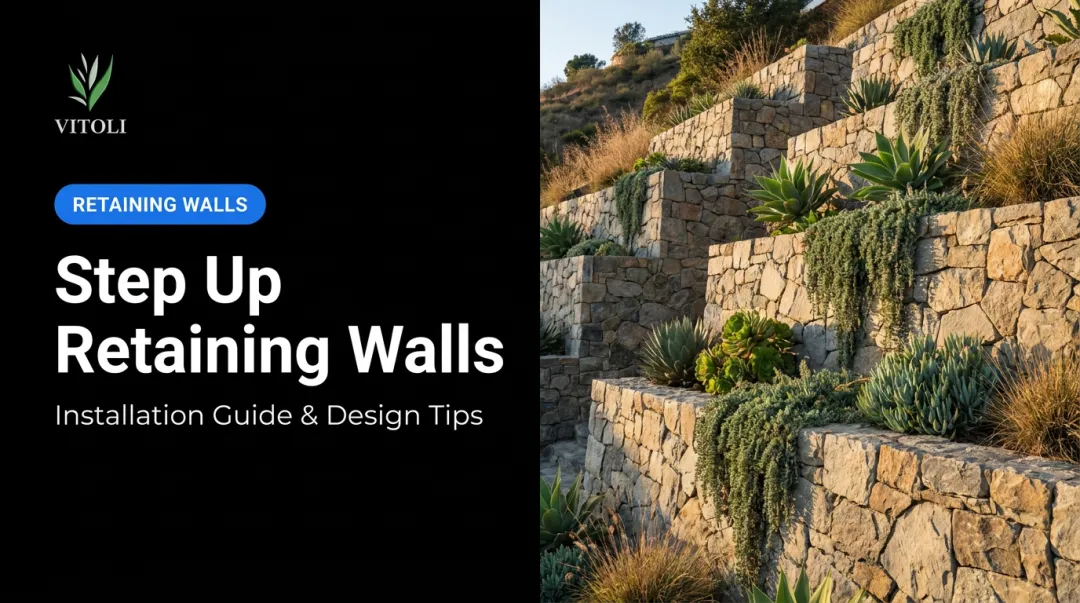
Material continuity across tiers matters. Using the same stone on the retaining wall face, patio surface, and built-in seating walls creates a cohesive aesthetic that reads as designed — not assembled piece by piece. Integrated planters at tier transitions soften the hardscape edges and blend structure with landscape.
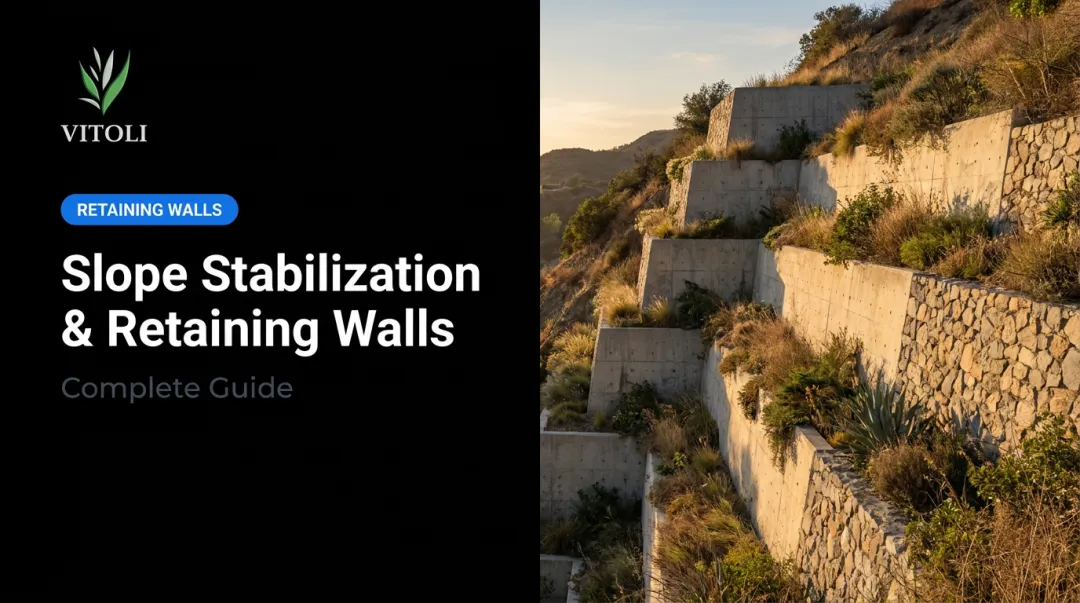
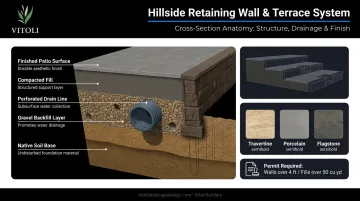
The engineering side can't be skipped. Under California Building Code, retaining walls over 4 feet require permits, and Los Angeles County grading guidelines require permits for any grading exceeding 50 cubic yards. These aren't bureaucratic hurdles — they reflect real structural requirements for long-term stability on sloped terrain.
Vitoli Builders approaches every tiered terrace project with a site evaluation first: soil composition, slope grade, drainage patterns, and load requirements are all assessed before a single aesthetic decision is made.
Drainage is non-negotiable. Gravel backfill, perforated drain lines, and weep systems are integrated into every retaining wall to prevent the hydrostatic pressure buildup that causes premature wall failure.
Luxury Outdoor Kitchens and Al Fresco Dining Areas
Southern California's near-year-round outdoor dining climate makes an outdoor kitchen one of the highest-value investments a homeowner can make. NAR's data puts outdoor kitchen cost recovery at 100% — the only outdoor improvement category to fully recover its cost at resale, alongside overall landscape upgrades.
A full luxury outdoor kitchen includes:
- Built-in professional-grade grill and side burners
- Refrigerator, ice chest, and sink
- Countertops in weather-resistant stone — quartzite and large-format porcelain are popular for durability
- Cabinetry in stainless steel or powder-coated aluminum
- Specialty additions: pizza oven, wok burner, outdoor bar with built-in wine cooler
Zoning is what separates a functional kitchen from a luxurious one. The prep and cooking zone should be physically distinct from the dining area — ideally separated by a pergola or shade structure overhead. This creates natural circulation and keeps heat and smoke away from guests. A well-designed layout also includes landscaping buffers around the kitchen perimeter for both privacy and visual softening.
Details that elevate the overall design:
- Integrated task lighting under counters for evening cooking
- Stone finishes that echo the patio hardscape material
- A consistent color palette between kitchen cabinetry and surrounding structures
Vitoli's completed outdoor dining environments demonstrate this principle — projects pair pergolas with festoon lighting, textured stone surfaces, and lush greenery backdrops to create spaces that feel finished and intentional, not just utilitarian.
Custom Pools, Spas, and Water Features
A pool on a hillside property isn't just a luxury amenity — it can be a significant financial one. Redfin's analysis found that a pool adds nearly $100,000 to the value of a typical Los Angeles home, a figure that far outpaces most metro markets across the country.
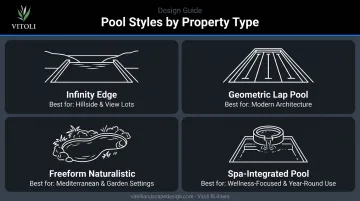
Pool style should match the property's architecture and terrain:
| Pool Style | Best Suited For |
|---|---|
| Infinity edge | Hillside lots with canyon, city, or ocean views |
| Geometric lap pool | Modern architecture, clean-line aesthetics |
| Freeform naturalistic | Organic or Mediterranean styles, garden settings |
| Spa-integrated pool | Year-round use, wellness-focused homeowners |
Beyond the pool itself, accent water features add dimension without the footprint:
- Sheet waterfalls cascading over stone walls
- Pondless water features integrated into landscape beds
- Bubbling fountains as entry or garden focal points
Moving water pulls double duty — it's visually dynamic and creates white noise that reinforces the sense of retreat. On hillside properties with ambient traffic or neighbor proximity, that auditory layer matters.
A practical note on water use: ENERGY STAR-certified pool pumps use up to 65% less energy than standard pumps. LADWP also has phased conservation rules that can restrict pool filling during drought conditions, so energy-efficient equipment and pool covers are worth factoring into the design from the start.
Vitoli Builders constructs pools on sloped and hillside properties throughout Los Angeles and Ventura County. Every pool project is integrated within the same scope as retaining walls, terracing, and drainage — a meaningful distinction from contractors who treat pool and hardscape as separate engagements.
Fire Features and Layered Outdoor Lighting
Fire features have become a design staple — the AIA's 2025 Q2 Home Design Trends Survey reports outdoor fireplaces and fire pits at 21% popularity among architects surveyed. In Southern California, they extend the usability of outdoor spaces into cooler evenings and serve as social anchors for entertainment areas.
Luxury fire feature options:
- In-ground fire pits with built-in surrounding seating — the most social configuration, works as the central anchor of a lounge area
- Elevated fire tables — elegant, furniture-scale focal points for covered lounge zones
- Outdoor fireplaces built into a pergola wall — extends the evening season and adds architectural mass
One important local consideration: SCAQMD Rule 445 prohibits permanently installed wood-burning fireplaces in new residential developments where construction began after March 9, 2009. Gas-fueled fire features are permitted and are the standard recommendation for new construction across Southern California.
The Layered Lighting Approach
Fire and light work as a unified system after dark — a well-placed fire feature without coordinated lighting loses half its visual impact. The difference between a nice outdoor space and a magazine-quality one is almost always how the lighting is layered.
High-end outdoor design uses three distinct layers:
- Ambient — string lights, pendant fixtures under pergolas, soft overhead glow
- Task — under-counter kitchen lighting, pathway illumination, step lights built into retaining walls
- Accent — uplighting for trees and architectural features, in-pool LED lighting, spotlighting for sculpture or focal plantings
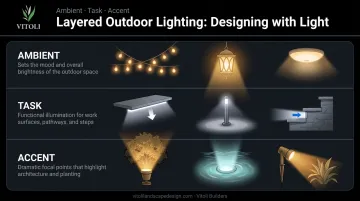
All three layers working together create depth and atmosphere. Smart lighting controls — programmable LED systems and app-controlled settings — let homeowners shift from a bright entertaining configuration to a soft, intimate setting without leaving their seat.
Vitoli's fire feature projects consistently pair the fire element with pergola string lighting and lush greenery backdrops, showing how fire and light reinforce each other when planned together from the start.
Lush Landscaping and Seamless Indoor-Outdoor Flow
Luxury landscaping isn't about volume of plants — it's about placement, intention, and plant selection that works with Southern California's climate rather than against it.
Drought-tolerant, California-appropriate plantings for hillside properties:
- Olive trees — sculptural form, low water needs, Mediterranean character
- Lavender — aromatic, drought-tolerant, softens hardscape edges beautifully
- Ornamental grasses — movement, texture, erosion-stabilizing root systems
- Succulents and agaves — striking visual impact with minimal irrigation
This isn't just an aesthetic choice. Sustainable landscapes can use up to 80% less water than traditional lawns according to Metropolitan Water District data, and MWD's BeWaterWise program currently offers residential rebates starting at $2 per square foot of removed grass — a financial incentive worth factoring into the landscape design budget.
Creating indoor-outdoor flow requires coordination between architecture and exterior design:
- Large sliding or folding glass walls that open the interior directly to the patio
- Matching or complementary flooring materials between interior and exterior spaces
- Aligned sightlines from indoor living areas to a key outdoor focal point — pool, fire feature, or view corridor
The finishing details that unify a space: a consistent material palette across retaining walls, patio surfaces, and raised planters; a cohesive color scheme that carries from interior furnishings to outdoor cushions and decor; outdoor-rated rugs and accessories that make the space feel as curated as an indoor room.
Vitoli's integrated design-build approach centers on enhancing views, improving flow, and harmonizing with the natural land — priorities that shape every decision from site grading through final planting.
Design Considerations for Southern California Hillside Properties
Hillside outdoor design in Los Angeles and Ventura County is a different discipline from flat-lot construction. The terrain demands it.
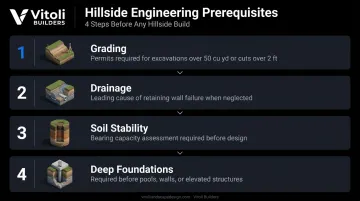
Before any design element can be properly executed on a sloped lot, the following must be addressed:
- Grading — LA County requires permits for any grading exceeding 50 cubic yards or cuts deeper than 2 feet
- Drainage — improper water management is the leading cause of retaining wall failure on hillside properties
- Soil stability — soil composition and bearing capacity must be assessed before foundation depths are determined
- Deep foundations — in many cases, caissons are required before retaining walls, pools, or elevated structures can be safely built
That same topography is also a significant design asset. Elevated positions offer canyon, city, and ocean views that flat-lot properties cannot replicate. The goal of hillside outdoor design is to frame and maximize those views — not obstruct them with poorly placed structures.
Executing all of this well requires that grading, drainage, foundations, hardscape, and planting work together from the start — not after the fact. Vitoli Builders' integrated model is built around that reality. With an in-house design and engineering team and over 20 years of hillside construction experience across both counties, the company handles caissons, retaining walls, drainage, hardscape, landscaping, and pool construction as a single coordinated scope.
That integration prevents the costly conflicts that arise when these disciplines are split across separate contractors — where a pool contractor's drainage design conflicts with a retaining wall built by a different firm, or a landscaper's grading undoes a hardscape installation completed by someone else.
Frequently Asked Questions
How much does a covered outdoor living space cost?
Covered structure costs vary widely : pergola installation typically runs $2,100 to $6,400 for a standard 100-square-foot structure, while full patio covers range from $4,500 to $12,000 nationally. In Southern California, hillside grading, local permitting, and site complexity can significantly affect total project cost. A design-build consultation is the most reliable way to get an accurate estimate for your specific property.
What is an outdoor living space called?
Outdoor living spaces go by several names (outdoor rooms, alfresco living areas, patio living spaces, outdoor entertainment areas) — any term works. What they share is intentional design for dining, lounging, cooking, or entertaining rather than simply existing as unused backyard.
What adds the most value to an outdoor living space?
According to NAR's 2023 data, outdoor kitchens (100% cost recovery), overall landscape upgrades (100%), and new patios (95%) consistently rank as the highest-return outdoor improvements. In Los Angeles specifically, pools can add nearly $100,000 to a home's value , making them a higher-impact investment locally than national ROI figures suggest.
How do you design a luxury outdoor living space on a hillside?
Start with engineering, not aesthetics. Grading, drainage, soil stability, and structural support (including retaining walls and potentially caissons) must be resolved before surface materials and design elements are selected. Working with a contractor experienced in sloped terrain ensures both long-term structural integrity and a design that capitalizes on the elevated views rather than working around them.
What materials are best for a luxury outdoor patio?
Premium options include natural travertine, large-format porcelain tile, flagstone, and architectural concrete. Porcelain is exceptionally durable and low-maintenance; natural stone offers more warmth and character. The best choice depends on your home's architectural style, maintenance preferences, and site conditions — and using consistent materials across the patio, retaining walls, and built-in features is what ties a high-end design together.
A well-designed outdoor living space does more than improve curb appeal — on a hillside property, properly engineered terrain becomes the design's greatest asset, expanding livable square footage and long-term property value in ways flat-lot projects simply can't match.
If you're ready to design your outdoor space — especially on a hillside or sloped lot in Los Angeles or Ventura County — Vitoli Builders brings over 20 years of integrated hillside construction expertise to every project. Reach out to schedule a consultation.