That's where hardscaping comes in. The structural, non-living elements of your outdoor space — pavers, walls, fire features, terracing — determine how your patio actually functions, not just how it looks. Get them right, and the space works for you in every season. Get them wrong, and you're dealing with drainage problems, unusable corners, and surfaces that don't hold up to the California sun.
This guide covers five design-forward hardscape upgrades that go well beyond the standard concrete slab, plus what you need to know before starting any project.
Key Takeaways
- Hardscaping includes all non-living structural elements: pavers, retaining walls, fire features, water features, and seating walls
- Custom paver patterns, built-in seating walls, fire features, multi-level designs, and water features each enhance patio function and aesthetics
- Drainage planning, material selection, and site assessment must happen before any installation begins
- Hillside and sloped properties in Southern California require contractors with specific terrain expertise, not just general landscaping experience
What Is Hardscaping and Why Does It Matter?
Hardscaping refers to the hard, non-living materials used to create structure within an outdoor space — stone, concrete, brick, pavers, and wood that form patios, pathways, seating areas, retaining walls, and functional zones. It's distinct from softscaping, which covers the living elements: plants, lawn, trees, and soil.
The distinction matters because hardscape is the foundation everything else is built around. Done well, it:
- Defines the layout and flow of your outdoor space
- Manages drainage to protect your property
- Determines how long surfaces hold up over time
- Controls how many months per year the space is actually usable
In Southern California, that last point matters more than most homeowners expect. According to the NAR's 2023 outdoor remodeling report, 79% of landscape professionals observed increased project scope since the pandemic — a clear signal that homeowners are investing more seriously in outdoor spaces. And with SoCal's climate, the return on that investment is built into every afternoon you spend outside.
Poor hardscaping, on the other hand, creates problems that compound over time: water pooling under pavers, retaining walls that shift, surfaces that crack and fade. Choosing the right materials and layout from the start — especially on hillside terrain — is what separates a space that lasts from one that requires costly repairs within a few years.
5 Unique Hardscape Ideas for Your Patio
1. Custom Paver Patterns with Creative Inlays
A standard grid-laid paver patio gets the job done, but it leaves a lot of design potential on the table. Custom paver patterns — herringbone, basketweave, circular medallions, or mixed-material inlays — can transform the same square footage into something that actually draws attention.
The good news: a skilled hardscape designer can achieve dramatic visual results without a proportionally dramatic cost increase. A contrasting border color or a single focal medallion at the center of the patio reads as intentional and refined, not expensive.
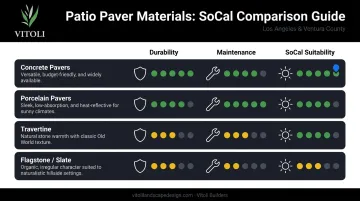
Material options for Southern California patios:
| Material | Durability | Maintenance | SoCal Suitability |
|---|---|---|---|
| Concrete pavers | High | Low-moderate | Strong — handles heat, requires joint sand maintenance |
| Porcelain pavers | Very high | Very low | Excellent — 100% UV and stain resistant with under 0.5% water absorption |
| Travertine | High | Moderate | Good — naturally heat-resistant and comfortable barefoot |
| Flagstone/slate | High | Moderate | Good — character-rich, best with proper base prep |
One practical note: whatever pattern you choose, it should complement your home's architectural style. A modern home with clean lines pairs well with large-format rectangular pavers in a running bond layout. A Mediterranean or Spanish-style home tends to suit natural stone with irregular shapes or warmer tones.
Paver patio installation in Los Angeles runs approximately $9–$28 per square foot, depending on material and complexity — a useful benchmark when budgeting.
2. Built-In Seating Walls with Integrated Lighting
Built-in seating walls solve two problems at once: they define the perimeter of the patio with structural character, and they eliminate the need for constantly rearranging outdoor furniture. The result is a clean, permanent entertaining area that's ready to use without setup.
Standard seating wall height is around 18 inches — comfortable for most adults and consistent with typical outdoor seating dimensions. Cap widths generally run 12–24 inches, and the finish material makes a significant difference in both comfort and aesthetics. Smooth bluestone, natural stone, and tile are all common choices, each with a distinct visual character.
Where seating walls add even more value:
On properties with any grade change, existing retaining walls can often be redesigned or capped to double as seating walls. Instead of a bare functional wall that holds back soil, you get a structural element that also anchors your entertaining space.
On integrated lighting: low-voltage LED lights embedded within or beneath seating walls extend evening usability significantly and create a layered ambient effect that string lights alone can't match.
The critical planning note: conduit should be run during the initial installation, not retrofitted later. Cutting through finished hardscape surfaces to add conduit afterward is one of the most consistently avoidable expenses contractors flag after the fact.
3. Outdoor Fire Features as a Patio Focal Point
A well-placed fire feature changes how a patio is used. It extends the evenings, anchors a seating area, and creates a natural gathering point that furniture alone can't replicate.
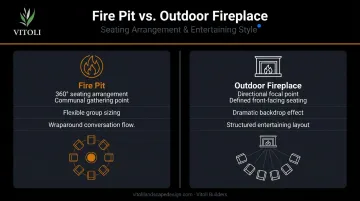
Fire pit vs. outdoor fireplace — the design difference:
- Fire pits create a 360° communal focal point. Seating wraps around them, which encourages conversation and works well for groups of varied sizes
- Outdoor fireplaces anchor one side of the patio with a dramatic backdrop. They're more directional — better for defined seating arrangements with a clear front and back
Both are effective. The right choice depends on how the patio is laid out and how you use the space.
For Southern California homeowners, one compliance point is non-negotiable: SCAQMD Rule 445 prohibits the installation of permanently installed wood-burning outdoor fireplaces and fire pits across most of the region. Gas fire features are the practical direction for most LA County and Ventura County properties — but local fire codes, HOA rules, and required clearances still vary. Verify requirements with your municipality before finalizing any design.
Placement matters regardless of fuel type. Fire features need sufficient clearance from overhead structures, combustible materials, and overhanging trees. They should be integrated into the patio design from the start, not added as an afterthought once everything else is in place.
4. Multi-Level Tiered Patio Design
Flat patios can feel either cramped or empty depending on their size. Multi-level designs solve both problems by using grade changes to create distinct outdoor zones — a dining area on one level, a lounge or fire pit area on another — giving large patios purpose and making smaller ones feel more layered and interesting.
Practical functional advantages:
- Level transitions naturally separate areas without requiring walls or visual dividers
- A kitchen counter on an upper tier becomes a bar-height surface for the lower tier (standard counter height is around 36 inches; bar height runs 40–42 inches)
- Grade changes reduce the need for railings in many configurations, keeping sightlines open
For Southern California hillside properties, multi-level design isn't just an aesthetic preference — it's often the most practical way to make sloped terrain actually usable. Rather than fighting the grade, tiered patio design works with it, converting challenging terrain into intentional, functional outdoor rooms.
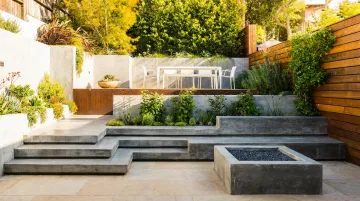
Vitoli Builders has completed more than 1,800 hillside projects across LA County and Ventura County, integrating terraced patios, retaining walls, drainage systems, and caisson foundations into unified outdoor environments. That engineering foundation — handling drainage and structural stability alongside the design — is what separates a tiered patio that performs long-term from one that shifts or erodes within a few seasons.
5. Water Features Integrated into Your Patio
Moving water changes the atmosphere of an outdoor space in ways that are hard to describe until you've experienced it. A wall-mounted water wall, pondless fountain, koi pond, or bubbling rock feature introduces sound, motion, and a sensory layer that static hardscape can't deliver.
Practical benefits beyond aesthetics:
- Noise masking: A 2024 study published in Applied Acoustics found that water features effectively mask road traffic noise — particularly relevant in suburban LA where ambient street noise is a constant
- Cooling effect: Research published in Building and Environment found that vegetation combined with a water feature produced measurably better cooling effects than configurations without water — useful context for warm SoCal afternoons
- Wildlife: Moving water draws birds and beneficial insects, adding life to a patio garden
Installation considerations to plan early:
- Proximity to power for the pump — this affects placement options more than most homeowners anticipate
- Waterproofing of surrounding paver surfaces to prevent long-term water intrusion
- Seasonal maintenance requirements: cleaning, debris removal, and pump care
On hillside properties, there's one additional factor: water feature runoff needs a clear path away from the structure. Planning drainage integration from the start prevents the kind of slow water intrusion that undermines surrounding hardscape over time.
What to Consider Before Starting Your Hardscape Project
A strong hardscape project starts before any material gets selected — it starts with understanding the site.
Site Conditions First
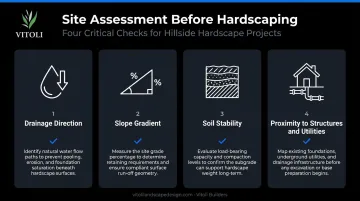
Before selecting materials or finalizing a design, evaluate:
- Drainage direction — water needs a clear path away from the patio and any adjacent structures
- Slope gradient — affects grading requirements, structural needs, and which design approaches are appropriate
- Soil stability — determines what kind of base preparation is required before any surface is installed
- Proximity to structures and utilities — affects placement of features, excavation limits, and conduit routing
Vitoli's team, including Project Manager Oz Tzalalihin, identifies lack of drainage planning and inadequate base preparation as the most common sources of avoidable cost overruns in hardscape projects.
Material Selection
Materials should complement the home's exterior, hold up to SoCal's UV exposure and occasional rain, and match how much maintenance you're willing to do long-term:
- Concrete pavers and porcelain are lower-maintenance options — durable, consistent, and easy to clean
- Natural flagstone and travertine offer more visual depth but require occasional resealing and more careful base preparation
Permitting
In California, permit requirements depend on scope. Simple paver patios typically don't require permits, but the following usually do:
- Retaining walls exceeding 4 feet measured from the bottom of footing to the top of wall (per California Building Code Section 105)
- Significant grading or drainage modifications
- Gas lines for fire features
- Electrical for integrated lighting systems
Working with a licensed contractor — such as one holding California Contractor License #1043914 — ensures code compliance is built into the process from the start.
How to Choose the Right Hardscape Contractor
The criteria for evaluating a hardscape contractor:
- Verify a valid state contractor license through the California Contractors State License Board
- Confirm relevant project experience — multi-level patios, hillside terrain, and design-build work require skills well beyond general landscaping
- Review a portfolio of completed projects similar in complexity to yours, not just aesthetics
- Expect transparent communication and a dedicated project manager who keeps you informed at every stage
These criteria matter for any patio project — but for Southern California homeowners with sloped or hillside properties, contractor selection carries real structural stakes. General landscaping experience doesn't prepare a team for tiered patios, engineered retaining walls, or caisson-supported foundations. Choosing a contractor without that specific background can result in structural failures that cost far more to fix than to prevent.
Vitoli Builders serves LA County and Ventura County from their Calabasas headquarters, bringing design, engineering, and construction under one roof. Their specific expertise in challenging hillside terrain — from precision grading to caisson foundations — is built into the way they approach every project.
Frequently Asked Questions
How much should a 20x20 patio cost?
A 400 sq. ft. patio varies widely by material: concrete runs roughly $4–$30 per sq. ft., paver patios in the Los Angeles area typically land between $9–$28 per sq. ft., and natural stone falls in a similar or higher range. Add-ons like seating walls, lighting, and multi-level grading increase those base figures.
What is the most durable material for an outdoor patio hardscape?
Concrete pavers and natural stone (travertine, bluestone) are among the most durable options. For Southern California's heat and UV exposure, lighter-colored materials that reflect rather than absorb heat are generally preferred — porcelain pavers in particular offer excellent UV resistance and very low water absorption.
Do I need a permit for a hardscape patio in California?
Simple paver patios typically don't require permits, but retaining walls over 4 feet, significant grading, drainage modifications, and electrical or gas work usually do. Check with your local municipality and work with a licensed contractor to confirm what applies to your project.
What is the difference between hardscaping and landscaping?
Hardscaping covers the non-living structural elements — pavers, walls, patios, fire features. Landscaping covers the living elements — plants, lawn, trees, shrubs. Strong outdoor design integrates both into a cohesive environment where each supports the other.
How long does it take to install a hardscape patio?
A straightforward paver patio may take a few days; a multi-level design with seating walls, fire features, or water elements can take several weeks. Factor in permitting lead time upfront — depending on scope, that alone can add weeks to the schedule.
Can hardscaping be done on a sloped or hillside property?
Yes — and hillside properties are often well-suited to multi-level hardscape designs, terraced patios, and integrated retaining walls. This work requires a contractor with grading and drainage expertise and, in some cases, structural engineering. It's not a standard landscaping project.
A well-designed patio hardscape creates a functional extension of your home that holds up through years of Southern California weather. Whether your project involves creative pavers, a built-in seating wall, a fire feature, multi-level terracing, or a water element, the outcome depends heavily on getting the planning right from the start.
If you're a Southern California homeowner considering a patio upgrade — especially on a hillside or sloped property — reach out to Vitoli Builders for a consultation. With over 20 years of experience delivering hillside projects across LA County and Ventura County, the team brings the terrain-specific expertise that complex outdoor living spaces require.