Unlike concrete pavers stamped to mimic stone, flagstone is stone. Every patio ends up one of a kind — a fact that drives both its appeal and its staying power as a design choice.
This article covers the main flagstone varieties, inspiring design directions, layout patterns, what installation actually involves, and how to maintain a flagstone patio for decades.
Key Takeaways
- Flagstone varieties (sandstone, limestone, bluestone, slate) differ in color, durability, and heat retention
- Design styles span informal "crazy paving," clean rectangular layouts, and terraced multi-level configurations for sloped yards
- Installed costs run $15–$30 per square foot depending on stone type, installation method, and site complexity
- With proper sealing and basic upkeep, a flagstone patio can last well beyond 50 years
Why Flagstone Is a Timeless Patio Material
Merriam-Webster defines flagstone as "a hard stone with uniform internal layers that split easily into flat pieces suitable for paving." More practically: it's a sedimentary rock (typically 1 to 2 inches thick) that cleaves naturally along bedding planes, producing the flat slabs used for patios, walkways, and steps.
That geological origin is the root of flagstone's aesthetic advantage. No two slabs carry the same grain, tone, or edge profile. The result is a surface that feels discovered rather than installed.
Flagstone Types to Know
Each variety behaves differently underfoot, in sunlight, and over time:
- Sandstone — warm reds, tans, and earthy browns; relatively easy to cut; comfortable underfoot in Southern California yards where the palette complements sun-baked landscapes
- Pennsylvania bluestone — blues, grays, and greens; exceptionally hard; the natural cleft surface provides reliable grip even when wet, which matters around pools and water features
- Limestone — cool gray tones and dense composition; requires sealing to resist staining but holds up well in dry climates
- Slate — rich, dark textures; highly durable; tends to absorb more heat in direct sun, a consideration for exposed Southern California patios
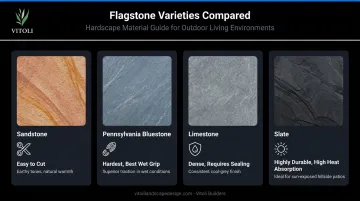
One practical note for hot climates: light-colored natural stones have a higher Solar Reflectance Index and reduce surface heat gain compared to darker varieties. In full-sun exposures across the San Fernando Valley or Ventura County foothills, that difference is noticeable underfoot.
Why Homeowners Choose Flagstone
Beyond aesthetics, flagstone has practical advantages worth naming:
- Resists weather, foot traffic, and temperature swings — properly installed flagstone can exceed 50 years of serviceable life
- Provides natural traction that smooth concrete or tile cannot match, a real safety advantage near pools and in areas with heavy morning dew
- Produces a one-of-a-kind surface; no two flagstone patios are identical
Beautiful Flagstone Patio Ideas to Inspire Your Outdoor Space
The best flagstone patio doesn't start with a pattern — it starts with how you want to use the space, what your home looks like, and what the surrounding landscape is doing. These design directions cover the range from relaxed and organic to structured and formal.
Irregular "Crazy Paving" Patio
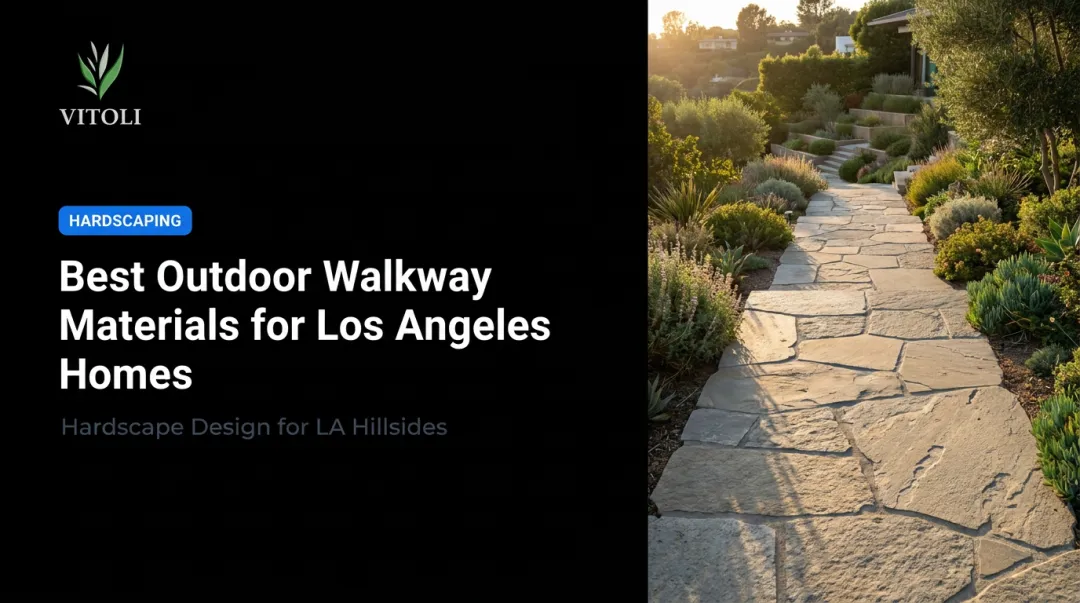
The informal flagstone layout — mismatched shapes fitted together with no two edges perfectly aligned — creates a patio that looks like it grew there. Gaps between stones can be filled with gravel, decomposed granite, or low-growing groundcover.
In Southern California yards, drought-tolerant plants work beautifully in those joints:
- Creeping thyme thrives in full sun and well-drained rocky soil
- Dymondia establishes quickly and handles foot traffic well
- Sedum tolerates dry conditions with minimal irrigation
Informal gardens, cottage aesthetics, and naturalistic yards all benefit from this layout — anywhere visual warmth matters more than geometric precision.
Rectangular and Cut-Stone Patio
Cut flagstone — uniform rectangles arranged in repeating or staggered patterns — reads as formal and clean. Contemporary homes, mid-century architecture, and outdoor dining areas are natural fits, particularly where furniture needs a level, stable surface.
Pennsylvania bluestone is a go-to choice here. Its dimensional consistency makes cutting and fitting more predictable than irregular fieldstone, and its blue-gray tones work well against both warm wood tones and cool concrete finishes.
Flagstone Fire Pit Patio
Flagstone creates a natural gathering zone around a fire feature. Circular or irregular stones radiate outward from a central pit, producing a focal point that draws people in for evening entertaining. The earthy tones complement both gas and wood-burning fire pits, and the layout works on flat yards and gently terraced slopes alike.
Flagstone and Greenery Combined
Intentional gaps planted with groundcover do more than look good — they actively reduce heat buildup across the patio surface on warm Southern California afternoons. Ornamental grasses like blue fescue add vertical texture between stones, while low-spreading thyme or sedum fill flatter gaps without competing with foot traffic. The result is a patio that reads as part of the garden rather than imposed on it — a distinction that matters in naturalistic or drought-tolerant landscape designs where hard edges feel out of place.
Multi-Level Flagstone Patio for Sloped Terrain
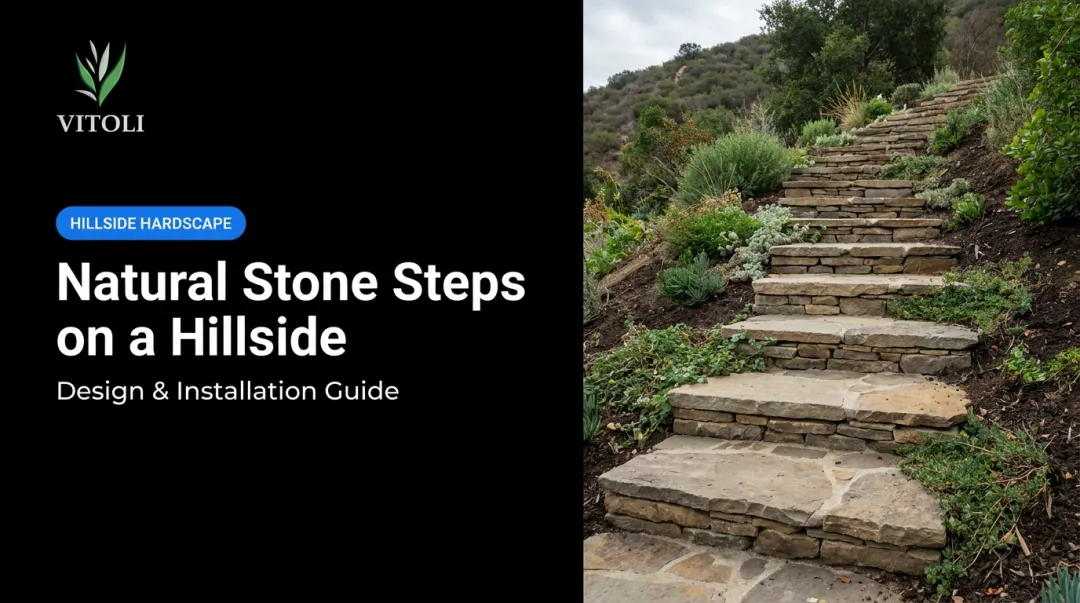
For hillside properties, a multi-level flagstone patio isn't just a design choice — it's often the most practical way to create functional outdoor space on a slope. Separate terraces connected by flagstone steps can define distinct use zones: a dining level, a lounging level, a fire feature level.
Structural engineering matters here as much as aesthetics. On complex sloped sites in Los Angeles or Ventura County, proper drainage, compacted bases, and retaining elements are what keep terracing stable long-term — not just how it looks on day one. Working with a hillside specialist like Vitoli Builders means the foundation work is engineered for the terrain, not improvised around it.
Mix-and-Match Stone and Material Combos
Flagstone doesn't have to cover the entire patio. It can be set alongside brick borders, inset into a gravel field, or paired with wood decking for a mixed-surface outdoor living area. Used as an accent rather than a full surface, flagstone delivers its natural character at a lower material and labor cost — a practical tradeoff for larger patios where budget needs to stretch.
Flagstone Patio Layout Patterns
Three broad pattern categories cover most residential flagstone projects:
| Pattern | Description | Best For |
|---|---|---|
| Irregular | Uncut natural shapes fitted organically | Informal, naturalistic yards |
| Random rectangle | Precisely cut stones in varied sizes | Traditional and formal landscapes |
| Geometric | Hexagons, diamonds, or custom inlay designs | Contemporary or architectural settings |
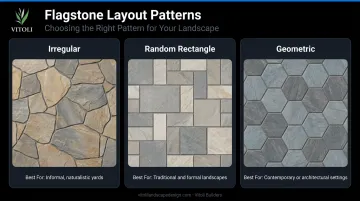
Pattern selection should reflect the home's architecture. An irregular layout beside a craftsman bungalow reads as intentional; the same layout beside a modern box house can feel unresolved.
Joints: The Detail That Changes Everything
The gaps between stones — the joints — affect both how a patio looks and how long it holds up. Common fill options include:
- Polymeric sand — stabilizes joints, discourages weed growth and ant infestation, resists erosion
- Mortar — creates a rigid, formal look; adds cost (mortar-set installation typically runs $20–$42/sq ft versus $15–$32/sq ft for dry-laid)
- Gravel or stone dust — casual, permeable, works well with irregular layouts
- Groundcover plantings — adds life and softness; requires species matched to foot traffic and sun exposure
One solid rule of thumb: avoid points where four stones meet at a single corner ("cross joints"). Keeping to three-way intersections creates better visual rhythm and makes leveling during installation more manageable.
Flagstone Patio Installation: What to Expect
The Installation Sequence
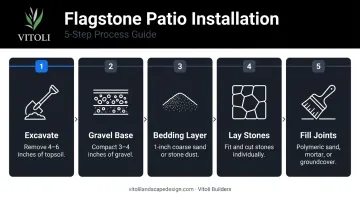
A properly built flagstone patio follows a consistent sequence regardless of stone type:
- Excavate 4–6 inches to remove topsoil and create room for the base
- Install and compact a gravel base — typically 3–4 inches of compacted gravel
- Add a 1-inch bedding layer of coarse sand or stone dust for a smooth setting surface
- Lay and fit stones individually, cutting to fill irregular gaps
- Fill joints with polymeric sand, mortar, gravel, or groundcover
This Old House recommends a minimum patio drainage pitch of at least 1/8 inch per foot to prevent water from pooling on the surface — a detail that matters even more on hillside sites where runoff is amplified.
Base preparation is what determines longevity. Get it wrong and even premium stone will shift, crack, or drain poorly within a few seasons.
What It Costs
According to both Angi and HomeAdvisor's 2026 data, installed flagstone patios run $15–$30 per square foot. Key variables that push the number higher:
- Stone type — bluestone and slate tend to cost more than sandstone
- Installation method — mortar-set is more expensive than dry-laid
- Site complexity — irregular shapes, slopes, and limited access all add labor time
- Base preparation — hillside sites with drainage engineering needs cost more than flat lots
For a typical 200–400 sq ft patio, total project costs commonly fall between $3,000 and $12,800.
Professional vs. DIY
Small, flat patios with simple irregular patterns are approachable for experienced DIYers. Projects involving slopes, drainage engineering, retaining elements, or significant square footage are a different matter.
On hillside terrain, improper grading leads to drainage failures, shifting stones, and expensive repairs down the road. Vitoli Builders works specifically with Los Angeles and Ventura County hillside properties, where that kind of integrated grading and hardscaping expertise is what keeps a project from becoming a costly fix later.
Flagstone Patio Maintenance Tips
A well-installed flagstone patio requires minimal ongoing effort. The basics:
- Sweep or blow off debris regularly to prevent organic matter from breaking down in joints
- Rinse the surface periodically; for deeper cleaning, use a neutral stone cleaner or mild dish soap with warm water — the Natural Stone Institute recommends avoiding acidic or abrasive cleaners on natural stone
- Scrub moss or algae with a soft brush and mild detergent; a pressure washer on a low setting works for annual deep cleaning, but start at the lowest pressure setting first — powerful washers can damage softer stones like sandstone
- Use polymeric sand in joints to discourage weed germination between maintenance intervals
Beyond routine upkeep, periodic sealing adds a layer of long-term protection that routine cleaning alone can't provide.
Sealing Flagstone
Sealing protects porous natural stone from staining and moisture infiltration. Look for a penetrating (impregnating) sealer rated for exterior use — these allow the stone to breathe while blocking surface moisture, which matters in climates with significant temperature swings or seasonal rain. Always follow the manufacturer's resealing schedule rather than applying a fixed interval; the right timing depends on the specific product, your stone's porosity, foot traffic, and local weather exposure.
Frequently Asked Questions
How much does a flagstone patio cost?
Installed flagstone typically runs $15–$30 per square foot, with dry-laid installations at the lower end and mortar-set or concrete-set work running $20–$45/sq ft. Sloped or hillside sites cost more due to additional drainage and base preparation requirements.
What type of flagstone works best in a hot climate like Southern California?
Lighter-colored varieties — certain sandstones and Arizona flagstone — have a higher Solar Reflectance Index and stay cooler underfoot in direct sun. Bluestone is highly durable but its darker tones absorb more heat, which can be uncomfortable on an exposed south-facing patio.
Can flagstone be installed on a hillside or sloped backyard?
Yes, flagstone works well on slopes when designed as a multi-level or terraced layout. Proper drainage engineering and a stable compacted base are non-negotiable on hillside sites. Professional installation is strongly recommended for anything beyond a gentle grade.
What can I plant between flagstone pavers?
In warm, dry Southern California conditions: creeping thyme, dymondia, and sedum all handle drought and well-drained joints well. Decomposed granite works as a non-plant alternative. Moss suits shaded, consistently moist areas but is impractical in full-sun Southern California exposures.
How long does a flagstone patio last?
With proper installation and maintenance, flagstone can approach or exceed 50 years. Durability depends on stone type, base quality, climate exposure, and sealing frequency. Installation quality is the single biggest variable: a poor base will shorten the lifespan of even the best stone.
Is flagstone better than concrete pavers for a patio?
Flagstone offers a natural, one-of-a-kind appearance and surface texture that concrete pavers can't replicate, though it costs more and demands more skilled installation. Concrete pavers install faster and cost less, but lack the organic character and long-term durability of natural stone. For homeowners prioritizing a patio that improves with age, flagstone is the stronger choice.